about us
studio
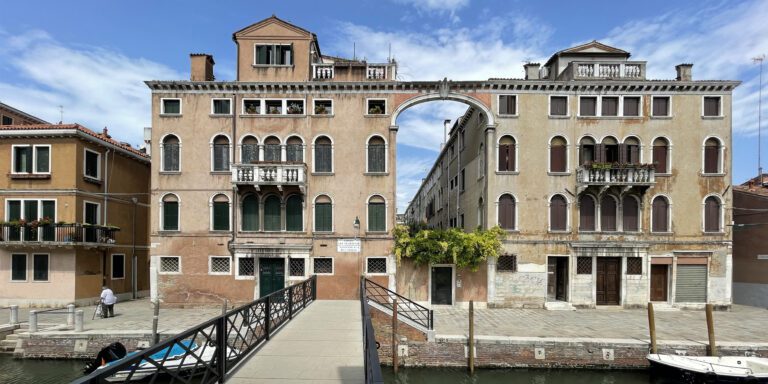
giorgio pettenò architetti is an architecture studio that deals with urban planning, architectural planning, and interior design. the studio has extensive experience in the design and construction of hospitality (hotels, spas, swimming pools, restaurants), industrial (logistics buildings), tertiary (office buildings) and residential (private homes) structures. particular attention is paid to interior design with the customized design of shops, showrooms, kitchens, tables, sofas and chairs. the purpose of the study is to always explore new ways to integrate an architectural idea with the essence of the place where it is to be born. rather than imposing a single style on different places, cultures and climates, it is the site and the specificity of the place that become the starting point for developing a new project. in this context also the use of materials, always enhanced in their intrinsic beauty, becomes an integral and stimulating part of the new project. this integrated approach to the use of sustainable architecture (where energy saving and reduction of air pollution are a key focus) leads to the creation of an architecture that responds to the needs of the contemporary world.
biography
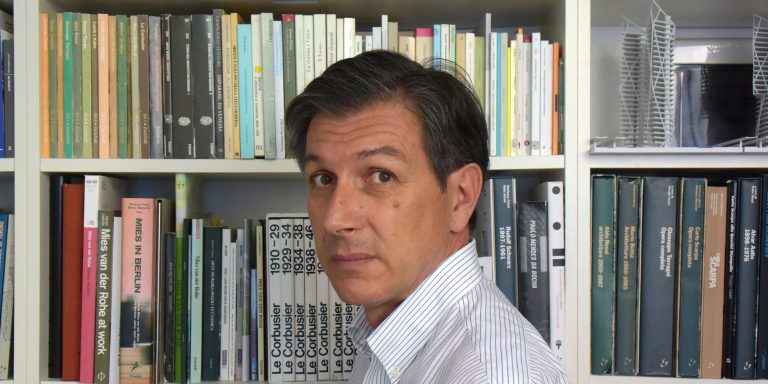
giorgio pettenò graduated in architecture at the iuav university of venice with gianugo polesello as supervisor and obtained a phd in architecture and construction (draco), curriculum in architectural and urban composition, from sapienza university of rome. he conducted research at iuav from 1996 to 2000 and was gianugo polesello’s assistant in the architectural design program from 1995 to 2002. he worked at the canali associated studio in parma from 1996 to 2000 dealing with the projects for the construction of the new plants prada industrialists in tuscany, for the construction of a new residential complex in alba and for the renovation of the former tobacco factory in milan, also participating in competitions for the expansion of the innsbruck town hall and for the new museum center the “city of cultures” in the area of the former ansaldo of milan. he opened his own professional studio in venice in 2000 and in 2002 won the competition for the construction of the new scandiano exhibition center (reggio emilia). in addition to his professional activity, giorgio pettenò has dealt with some murst research such as “architecture and central and monumental areas” and “the centuriations of central veneto: the case of camposampiero, a hypothesis/project for a university settlement” coordinated by gianugo polesello for whom he was also one of the curators of a publication on his work. he is currently working at the department of architecture and design at sapienza university of rome on research entitled “made in italy, forms of desire”.
list of works
2026
- new logistics headquarters, quarto d’altino
italy
built projects
2022
- kindergarten, sant’antonino
switzerland
unbuilt projects
2021
- auditorium, tivoli
italy
unbuilt projects
2019
- glass pavilion, marcon
italy
unbuilt projects
2017
- winter garden, marcon
italy
built projects
- cst-national swimming centre, tenero
switzerland
unbuilt projects
2016
- santo spirito island/rehabilitation project, venice lagoon
italy
unbuilt projects
2015
- office towers, mestre
italy
unbuilt projects
2014
- parish complex of the madonna del carmine, santa maria la carità
italy
unbuilt projects
- office building, parma
italy
built projects
- primary school, ursy
switzerland
unbuilt projects
2013
- senior city, cortina d’ampezzo
italy
unbuilt projects
- kindergarten, tenero-contra
switzerland
unbuilt projects
2012
- sk apartment, venice
italy
built projects
2011
- ovv travel agency, quarto d’altino
italy
built projects
- kindergarten, lugano
switzerland
unbuilt projects
2010
- new sleeve of welcome in villa della regina, turin
italy
unbuilt projects
2009
- kindergarten, cazzago san martino
italy
unbuilt projects
2008
- eth-campus hönggerberg-student housing, zurich
switzerland
unbuilt projects
- logistics headquarters, quarto d’altino
italy
built projects
- relais ormesani, marcon
italy
built projects
2005
- extension of the automobile museum, turin
italy
unbuilt projects
2004
- exhibition center, scandiano
italy
unbuilt projects
- requalification of the trade fair of gorizia
italy
built projects
- telecommunication tower, sogliano al rubicone
italy
unbuilt projects
- airport of pantelleria island
italy
unbuilt projects
people
collaborators 2000-2026
alain keyrouz, alberto allegrini, alberto ceschin, alberto galvani, aleksandar tkalec, aleksandra komljen, alessandra mecchia, alessandra zei, alessandro lenzi, alessandro zanin, amedeo monaco, andrea gioieni, andrea pittaro, andreamalia amabile, anna fornasier, antonio lopez gandana, beatriz jimenez alcaide, bernard klein, susana camino lamas monje, caterina sguassero, claudio vianello, david bernabe machuca, davide del favero, davide mazzucato, denise covassin, eduardo calbo gonzales, elena cornejo sanz, elvis paja, emanuele del mondo, emanuele tibaldo, enrico felici, federico da dalt, filippo de benedetti, francesca ligabue, francesca zava, francesco tonizzo, francisco javier soto torrecilias, francisco javier vizioso hoyo, francisco leon leon, giacomo de caro, giorgia tullio, giovanni sarandrea, ilaria ferraboli, isabel gonzàlez de leòn, ivan olivotto, javier gomez herrero, juan laborda herrero, katja kovacic, kurt raffeiner, laura moglie, laura stroszeck, lorenzo rigoni, luca pagani, marco barbato, marco rigo, marcos vicente herranz, maria titos sanchez, marie fourtier, marlene elena lopez gandara, marta izcue lasheras, marta manca, marta valdivieso, matteo salviato, mauro masieri, michele perissinotto, miguel ternero gil, nadine wunschel, nazaret torres heredia, nicola baccega, nicola brembilla, nicola pellegrini, noelia manzano fijò, nunzia di molfetta, ottavia manzo, pablo tovar navarro, rafael hidalgo soria, roberto chamorro blanco, roger carrera català, rossella pedà, sabrina cadoni, samuele xompero, sandra leythaense, sante battistuzzo, silvia alvarez gomez, sofia bertoldi, sowmya baskaran, stefano freschi, valentina trombini, valeria ferraro, virginia hernàndez alonso, zhang junrui, zhen yuan.
publications
2012
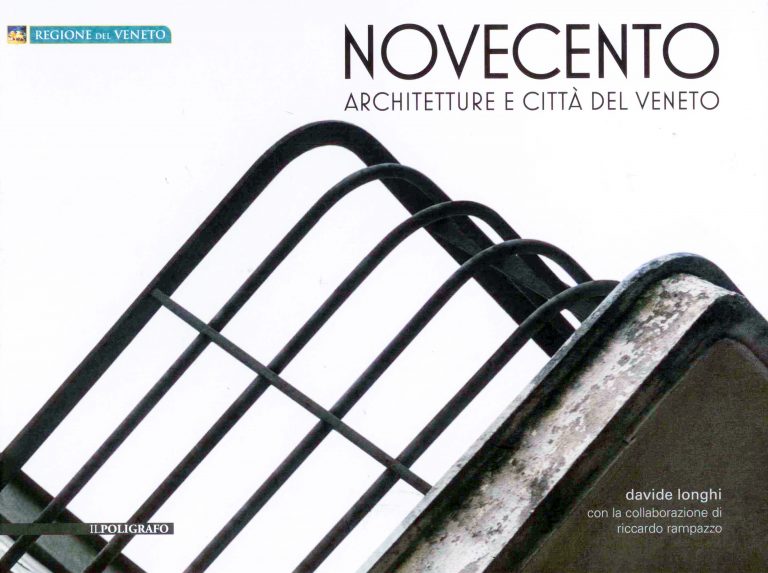
in “novecento. architetture e città del veneto”
by davide longhi
il poligrafo 2012
in “novecento. architetture e città del veneto”
by davide longhi
il poligrafo 2012
2009
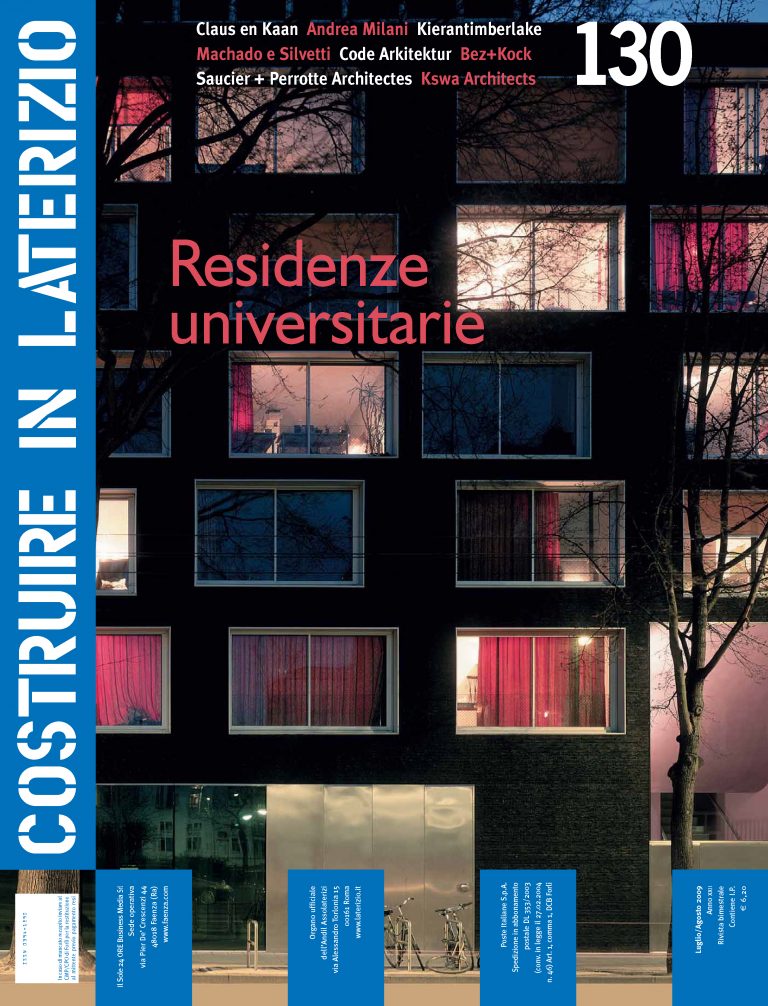
2008
in “almanacco di casabella architetti italiani 2008”
by marco mulazzani, paolo desideri, cino zucchi
mondatori 2008
2002
writings
2026
giorgio pettenò
sapienza università di roma
phd in architecture and contruction
curriculum in architectural and urban composition
phd program: XXXVII
supervisors: renato capozzi, armando dal fabbro
abstract: the thesis addresses one of those fundamental theoretical themes and nodes of research in the field of architectural composition, namely that of the efficient role of archetypes in architecture. in the first chapter “the beginning”, after a preliminary survey of the meaning of archetype – from semiotics to sociology, from analytical psychology to philosophy – the research focuses on the declination/reception of the concept of archetype sub specie architecturæ, collecting and summarizing the main positions of theorists (ugo, masiero, capozzi), treatise writers (vitruvius, alberti, quatremère, semper, kircher) and architects (le corbusier, mies, monestiroli, grassi), regarding the topicality and significance of archetypes in relation to the continuous process of refoundation and inaugurating ‘beginning’ of forms, as well as of the deep, archetypal, underlying structures. the basic thesis, developed in the second chapter “archetypes”, is that, following some hypotheses formulated by vittorio ugo and other scholars, there are axiological and structural relationships between natural archetypes, types and some corresponding ectypes, consisting of selected works in the historical thickness of architecture. the third chapter “ectypes” is dedicated to the critical analysis of such ectypic exempla, identifying some fundamental types – classical temples/hypostyle halls, courtyard buildings/hall buildings, pyramids/towers – and their corresponding ectypes: the parthenon in athens; the hypostyle hall of ramesses II in karnak; the agora of miletus; the pantheon in rome; the pyramid of cheops in giza and the etemenanki in babylon. finally, in the fourth chapter “continuity”, in support and demonstration of the thesis on the permanence of the archetype in the continuity of architecture, through a process of comparative analogy, the paradigmatic exempla proposed in the third chapter are preceded by an equal number of corresponding and emblematic exempla found in the modern and contemporary, called into question and critically redesigned to demonstrate the continuity and persistence of the archetypal modelling structures, or rather of the schemata, in the emblematic works in the research of some masters – boullée, mies, kahn / vacchini, monestiroli, meda, polesello, rossi, libera, venezia – ultimately substantiating and demonstrating its a-temporal synchronicity, its compelling topicality and its substantial independence from historical evolution.
giorgio pettenò
in “un architetto, un dettaglio”
edited by anna irene del monaco, dina nencini
il poligrafo 2026
1. the concept of the “skin and bones” building
to understand the crucial role of the column in ludwig mies van der rohe’s architecture, we must begin by acknowledging the transformation of construction systems that mies had embraced since the 1920s. from that time onward, mies explicitly theorized the need to rediscover a clear distinction between the column, which supports the roof, and the wall, understood merely as an element of spatial delimitation: it is the principle of the “skin and bones” building that constantly recurs in mies’s reflections.
as fritz neumeyer observes: «the simple search for the legitimacy of elementary construction, as mies had elaborated it in his theory of the “skeleton” or the “skin-and-bones” building, was based on a supposedly archetypal construction principle which, so to speak, was based on the conditions of perfect suitability for the purpose and an equally perfect treatment of materials». in a lecture on december 12, 1923, held at the bund deutscher architekten in berlin, mies showed for the first time a series of images attributable to the concept of the “skin-and-bones” building. among these images was a leaf hut: «this is an indian’s leaf hut. have you ever seen anything more perfect in terms of fulfillment of functions and treatment of materials? isn’t this perhaps the best use of the shade of the virgin forest?». only at the end of his lecture does mies return to the present, showing the image of the imperator ocean liner: «here you see a floating mass dwelling, created based on the needs and means of our time. now i ask again: have you ever seen anything more perfect in terms of functionality and treatment of materials?».
the primitive hut and the modern steel ocean liner were, therefore, the guiding constructions that mies took as models of a formative process of extraordinary functionality. both corresponded to a simple, objectively grounded creation, in which the authentic primitiveness of the past and the grandeur of certain contemporary engineering feats met on equal terms.
2. the use of the column in the 1920s and 1930s
it was, therefore, in the late 1920s, after the construction of the lange and esters houses in krefeld (1928), where the walls were still load-bearing, that mies introduced the use of the column for the first time with the barcelona pavilion. in the project, developed between november 1928 and february 1929, the distinction between load-bearing and separating elements now appears in all its clarity. the steel columns, whose standard profile mies gave the shape of an equal-armed cross in plan, are wrapped in a continuous cladding of chromed sheet metal, reminiscent of gothic polystyc pilasters or greek columns with their fluting.
as colin rowe observed, the spatial revolution brought about in the 1920s by what would become known in america as the international style, «is the result of a revaluation of the functions attributed to the column, the wall, and the roof; and, in the most mature examples, it postulated the adoption of a skeleton structure» which, freeing the wall from its load-bearing function, freed the column to rise in the open space of the building. the wall, now separated from the isolated column, could now become exclusively a free dividing element of the space, a prerequisite for what would be defined as a “free plan”. therefore, it can be said that in mies’s buildings, between 1929 and 1942, the column is used essentially as an element punctuating a space that extends horizontally.
in 1930, almost simultaneously with the work on the barcelona pavilion, the tugendhat house in brno was also completed, where, for the second time, mies employed cruciform columns. however, despite using the four standard l-shaped profiles assembled to form a cross, in this case, unlike the barcelona pavilion, they were covered in a chromed sheet metal that did not adhere perfectly to the steel profiles, but rather wrapped them with rounded edges at the ends of the cross, conveying a sense of continuity that made the column appear as a monolith. while in the pavilion’s columns, the continuity of the chromed sheet metal was interrupted by flat profiles placed at the ends of the arms of the crosses, which fixed the chromed sheet metal to the structural core in a non-coplanar manner, this did not occur in the tugendhat house columns, because mies chose to fix the chromed sheet metal directly to the structural core through a clever interlocking effect that made the column appear as a single piece. it is therefore evidently an evolution or, better said, a refinement of the column of the barcelona pavilion that mies would later use also in the projects for the houses with three courtyards (1934-38) and for the museum for a small city (1942), even though, since they were not built, we are not given to know exactly the type of cruciform column that would have been used.
3. the use of the “column” beginning in the 1940s
but it was in the 1940s that mies, having arrived in chicago, began to develop a clear preference for the block-shaped building, «and, very importantly, in acquiring this preference, he also seems to have developed an antipathy for his previous conception of the column». the characteristic cruciform column of the german period now takes the form of an h-shaped pillar. the column, which in the german period was clearly separated from the wall and isolated in space, now becomes an element directly connected to the building’s envelope, almost a sort of pilaster.
at this point, however, and before continuing, it is necessary to try to provide an ontological definition of the column’s essence: «the column, in its status as a convex body, is to be understood as entirely distinct from the pillar, which is instead obtained by quarrying out of the wall. in mies, the columns are only those he calls columns, that is, cruciform and isolated ones, because the being of the column certainly does not concern its shape, but the possibility of having air around it and of being isolated inside or even at the perimeter, therefore, with the possibility of being able to walk around it to consolidate its “surrounding around something” (from the greek: περιίστημι, from which peristasis) as in the classical temple, whose peristyle defines an intermediate space that is covered but open».
as previously mentioned, therefore, the cruciform column makes its last appearance in the 1942 project for a museum for a small town, while already in the minerals and metals research building built on the iit campus in chicago in 1942, an h-shaped profile appears for the first time. «as rowe observes, this change is epistemic in nature, not only because the integration of structure and partition wall transforms the character of the space, but also because the revelation of the joint between column and beam represents a return in time to the tectonic tradition».
the moment of this transition is even more evident in the subsequent buildings mies was commissioned to design on the iit campus, such as the unbuilt library and administration building (1944), in which an exposed h-profile is the main element on the façade, or the alumni memorial hall (1945), where mies, forced to create a fire-resistant structure, divided the vertical load-bearing elements into the kunstform of representative steel profiles and the kernform of fire-resistant steel, obtained by encasing the h-profiles in concrete to form pillars. these supports, placed off-line, as in the case of the minerals and metals research building, but set back from the building envelope, allow for a more symmetrical treatment of the recessed corners, which, clad on the outside by an angular steel profile that identifies the vertical elements, are terminated at the sides by two h-profiles also fixed to the load-bearing vertical elements and necessary to accommodate the perimeter brick walls.
this solution would be employed by mies, partly in the subsequent 860 lake shore drive apartments in chicago (1948–51), but above all in the seagram building in new york (1954–58), where, forced to use, once again, a fire-resistant steel structure, he clad the h-shaped profiles of the load-bearing vertical elements, again with concrete, but this time introducing an external cladding of bronze metal panels that, in addition to covering the pillars, also incorporated rectangular profiles of insulating material. placed between the internal pillars and the external h-shaped profiles, these acted as thermal breaks, thus solving the age-old problem of thermal bridges.
with the farnsworth house (1945–50) built in plano, mies made a further evolutionary leap because, for the first time, he extruded the load-bearing structure like an exoskeleton, placing the supports outside the building’s perimeter. in this case, eight full-height h-section profiles, fixed to the two main roof faces where the main perimeter beams are located, support the floor and ceiling, giving the building an extraordinary suspended effect.
but the farnsworth house is paradigmatic from the point of view of its construction and conformation typology also because it lays the foundations for what mies will experiment with in various ways for the rest of his life, namely the use of large beams which, placed on the extrados of the roof and resting on h-shaped pillars placed on the outside, allow the possibility of the clear-span buildings on one street of which the project for the drive-in restaurant in indianapolis of 1946 is the forerunner and which, passing through the project for the national theatre in mannheim of 1952, arrives at the crown hall of the iit in chicago of 1956 which «is perhaps the most canonical and exemplary, not only because it is the only one that has been realized, but also because it combines the sectional scheme of the farnsworth house with the structural system equipped with posts of 860 lake shore drive».
4. the use of the column in the 1950s and 1960s
beginning in the 1950s, mies, continuing his research on clear-span buildings, developed a further evolution of this hall-shaped architectural type with the introduction of a two-way orthotropic lattice roof. previously, the use of beams placed on the roof’s extrados only worked in one direction, thus favoring the development of rectangular-based figures. now, with the new structural typology of a ribbed plate or the possibility of a two-way spatial lattice, mies was able to broaden its scope, extending it to square-based figures as well, but above all, realizing that he could finally work on a large scale. this centralized architectural type was first developed in the fifty by fifty house, designed in 1950, whose name derives from the fact that this house essentially consisted of a 50×50 foot (approximately 15×15 meter) lattice roof, supported by four h-shaped uprights placed at the center of the sides and fixed to the slab with interlocking constraints. but it was with the 1953 design of the convention hall in chicago that mies addressed the theme of the “great universal space”, understood as «the most tangible expression of the level reached by a given civilization». it is a square building measuring 220 meters on each side, with an overall height of 33.5 meters and capable of hosting up to 79,000 spectators. the structural steel skeleton roof, approximately 9 meters thick, is supported by 24 truncated pyramid-shaped concrete pillars 6 meters high that form five structural spans per side with a center distance of approximately 36.6 meters. however, mies’s research on aula buildings continued with ever greater conviction in the following years, first with the design of the bacardi office building in santiago de cuba in 1957, which for the first time experimented with a ribbed concrete slab roof resting on eight cruciform columns arranged starting from the corners of a square plan. this was followed, first by the georg schaefer museum in schweinfurt in 1960, and then by the construction of the neue nationalgalerie in berlin in 1962/68, which used the same typological-constructive system. the roof’s lattice structure, in this case, takes the form of a horizontal steel plane with a total thickness of 1.8 meters, composed of the intersection of nineteen inverted t-beams welded to a horizontal steel plate. this lattice, which determines eighteen square coffers extending in both directions, accommodates two columns along each side, starting from the ends and after five modules. the eight columns, 8.4 meters high, are composed of the juxtaposition of four t-profiles which, welded at a central point, form a cruciform section. it follows that the column of the neue nationalgalerie, «tapered, with a capital defined ‘by absence’ that supports an architrave punctuated by triglyphs, inscribable in plan within a circumference», is able to express both its structural and mythopoetic nature. as kenneth frampton has observed: «although these cruciform supports of welded steel, independent of the walls as in earlier versions, serve as a metaphor for the classical order of the ancient world, they are, at the same time, distant both from their classical antecedent and from the dematerialized supports of chrome plates of mies’s middle period».
5. the «extraordinary untimeliness of mies»
ultimately, it could be said that mies, in composing the column of the neue nationalgalerie, by choosing to leave its structural reality exposed and, above all, redefining it as a symbolic-representative form, attempted to revive the formative process that led to the determination of the architectural orders of the classical period. if the new architectural-constructive order of the neue nationalgalerie represents a complete resolution of the kernform, from the perspective of the kunstform, this occurs without the use of a covering, as had occurred with the columns of the barcelona pavilion and the tugendhat house. the new steel structure overcomes the dualism between the essence of the structure and its formal representation: the nuclear form, which, however, does not coincide with that of the structure but rather with that of the internal spatial core (kernform), can finally be presented as an artistic form (kunstform). in this way, the technical forms of the steel structure can achieve a complete monumental resolution: the order of our century for the steel temple of the technological age.
as massimo cacciari observes in his essay res aedificatoria, mies van der rohe’s “classic”: «with this, we come closer to understanding that question: the question of the ‘wesen des bauens’. what every construction was—and what the anamnesis of the creator must once again “imagine”: this is the true meaning of mimesis (not reproduction, as octavio paz marvelously understood, but recreation of “older” archetypes of every language—imagination of a past that is also the eternal future of every language».
mies’s lesson, therefore, teaches us that «mimesis does not mean a “servile” (and absurd) attempt to “double” the idea, but an active-imaginative placing oneself at its service to represent-manifest it». the relationship between foundation and change stands as the crucial theme of the very essence of architecture, and mies, with his transfiguration of the classical concept of the column into a contemporary reconceptualization (reconfiguration), is perhaps the most valid example.
2012
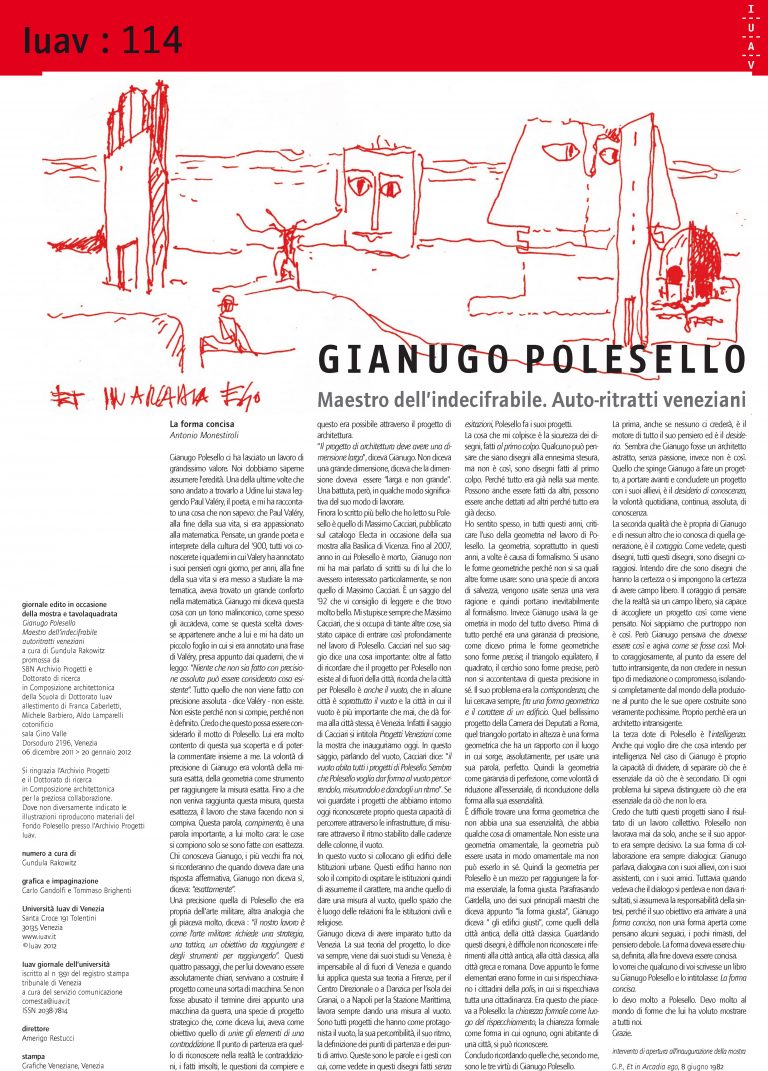
giorgio pettenò
in “iuav giornale dell’università” n.114
there is no doubt that gianugo polesello’s drawings can certainly be understood as the graphic explanation of his architectural theory. as antonio monestiroli rightly observed in his introduction to the inauguration of the exhibition at the iuav: «gianugo’s drawings are executed without hesitation, they are confident drawings, made at the first shot, because everything came from his mind»; and in fact this exactness in his drawings is nothing more than the graphic expression of an absolute clarity of thought. in the graphic diagrams of polesello there are no corrections, no more versions of the same project, there are no second thoughts or deletions, but a single version of the project/thought. it is no coincidence that he used the pen and not the pencil to trace his drawings, he did not need to apply erasures, he just needed a certain, unique and unchangeable sign like the one traced with ink.
even the techniques of representation he employed were therefore coherently subservient to the completion of his project/thought. the first is the fundamental use of the plant as a basic and essential element; in fact, he wrote about it: «the plant is the profound idea of architecture because it is such only if it allows us to see the possibilities of sensible forms; but it is not a sensitive form. the plant is a concrete emblem of architecture». so therefore also the constant use of the section was intended in him as a “vertical plan”, while the preference for the use of axonometry, a representation technique developed in the seventeenth century by military engineers (a theme dear to him was that of military art), allowed him a three-dimensional representation of buildings and at the same time guaranteed him an objective precision in the representation.
as massimo cacciari writes in the introduction to gianugo’s monograph: «polesello schemes reach great complexity, but always let the simplicity of the idea shine through. simplex sigillum veri». but rather than simplicity in polesello we should speak of elementarism, indeed at this point we should make a distinction between simple and elementary. simple is said of a single piece and therefore devoid of composition, the elementary instead arises from the composition of some elements according to certain rules. if we then relate this term with complex, the union of these two terms gives rise to a complementary conceptual couple of fundamental importance for the architectural process. architecture is always a complex construction in which the elements that compose it must be recognized. and therefore only through a wise administration of the elementary is it possible to obtain the complex. all this becomes evident by analyzing the works of polesello. his first goal is clarity, in his works there is no complication, but a natural complexity determined by the fact that the elements are related to each other without getting confused, maintaining their own identity and recognisability during the whole process. a process that rests its foundations in ancient codes, codes that look to greek/roman cities and that communicate their archetypal value of the object.
in polesello, the search for the new and the unusual does not necessarily represent a step towards knowledge. on the contrary, he uses the achievements of contemporary culture to rethink the historical experience of architecture. as umberto eco in “the absent structure” writes: «the leap back turns into a leap forward. history as a cyclical deception, gives way to the planning of the future». it can therefore be said that, despite the language of polesello being very far from tradition, he was one of the contemporary architects most closely linked to the spirit of the great monuments of antiquity. in this regard, it is worth mentioning an interview that polesello gave to n° 0 of “phalaris” (january-february 1989) regarding his project for the italian pavilion; he declares: «i never understood what modernity means, even if i often hear this word mentioned by francesco dal co: if there is something against which we have always taken a stand, it is modern architecture. i remember an episode, when we were together a lot, with aldo rossi, a youthful but persistent association, in short: i had presented a project for the construction of churches to be mass-produced to monsignor dilani, of the curia of milan, when archbishop was montini, and i don’t remember if i reiterated something that rossi said or we said together, however the question was whether the architecture should be modern, and i replied to this monsignor who had to be “antiqua (non vetera) sed novissima». here we could conclude by saying that gianugo polesello, in the course of his life, concentrated on the task of building timeless architecture.
teaching
università iuav di venezia
between 1996 and 2002 assistant of gianugo polesello at the course of architectural design held at the iuav university of venice
interviews
interview by divisare - 5th november 2015

1) can you tell us about your relationship with polesello? which elements of his architectural approach have you retained, which have you rejected?
i’ve retained a great deal! for me, gianugo polesello was a true master in the sense that he had a decisive influence on the development of my approach to architecture. he taught me how architecture should be perceived as “timeless,” in the sense that even contemporary architecture must preserve the spirit of the great monuments of antiquity. looking at his projects, despite the fact that his stylistic idiom was always far from traditional, it is indeed difficult not to recognise references to graeco-roman cities, and as in classical architecture, his aim was always to achieve clarity which, once attained, must enable us to see the simplicity of the idea – even in projects of great complexity. he made me understand that we must use the achievements of contemporary culture to rethink our notion of architecture as an ancient process.
i’ve rejected little! perhaps his “courageous intransigeance” in conceiving projects out of context and without making any compromises, to the extent of frequently refusing to occupy himself with the realisation or even the viability of his projects.
2) of the various educational possibilities – in an architectural practice, on building sites, at university – which do you consider the most effective?
being an architect is a complex occupation that implies interdisciplinary knowledge and requires a great deal of experience – as well as many “experiences.” architects are not allowed to be “specialists,” because if that were the case, their activity would be reduced to an insignificant phase of the project. therefore, as i always tried to do during my training, working in a practice, gaining experience on building sites, and academic studies must all be considered equally important. they must be combined and superimposed to create the “single entity” that an architect needs in order to adopt a holistic approach to his profession.
3) to sum up the history of architecture in two buildings, one old and one new: which two would you choose, and why?
i would choose the parthenon in athens and the neue nationalgalerie in berlin, because they sum up the way architecture is able to be radically innovative while preserving its own dna. analysing these two buildings helps us to understand how an ancient monunment can produce a modern work, just as a modern work can be understood as the solution to an ancient problem. with the neue nationalgalerie, mies van der rohe eloquently showed us the relationship that architecture must have with history. today, on the other hand, it seems to me that architecture is becoming an extraordinary collection of design objects which, parading before our eyes as buildings, inevitably go out of fashion within a few years. it seems to me that the architecture of today no longer has a theoretical, historical or critical basis. the new attitude seems to be that a project must appear as something unprecedented, something that has never been seen before. obviously, every project must have a certain modernity about it, but it must be a modernity that accommodates the values and forms of thousands of years of building.
4) do you believe in architecture competitions?
increasingly, architecture competitions are becoming characterised by the cultural uncertainty of many juries, who end up pinning their hopes on the trends of the moment without taking into account the relationship between their own transience and the permanence of the works that they select. it follows that competitions are becoming a real problem for architecture today, which confuses design with project, creativity with peculiarity, and formalism with form.
having said that, i believe in architecture competitions insofar as entering them, besides being a way to meet specific requirements, has become a pretext for conducting my own architectural research. i then always deploy this research, these experiments and experiences in the projects that i realise.
5) alberto savinio once wrote: “architecture is reflected in time; the face of every era is reflected in its architecture; relations between time and architecture are similar to those between the sea and the sky. why do we continue to say that architecture is an art?”
do you think that today’s architects are still capable of performing this public role?
i think so, although it seems to me that today’s architecture sometimes serves the sole purpose of celebrating public triumphs or of imitating the behaviour of society, for example, of the avant-garde, who are constantly preoccupied with establishing a new cultural order. however, the purpose of critical theory is to construct buildings, and not merely to complain that they are impossibile.